Getting Started with Ledger: Your Secure Crypto Journey Begins
Ledger's start page serves as the essential entry point for new users embarking on secure cryptocurrency management. It guides individuals through initializing hardware wallets, setting up companion software, and safely handling digital assets like Bitcoin and Ethereum. This comprehensive 1200-word guide mirrors the structured, beginner-focused approach of ledger.com/start, covering unboxing, device setup, app installation, and first transactions—all without external dependencies.
Why Start with Ledger?
Hardware wallets like those from Ledger represent the gold standard for crypto security, keeping private keys offline and protected from online threats. Unlike software wallets or exchanges, Ledger devices use a secure element chip to store keys, ensuring users maintain full control through self-custody. The start process emphasizes simplicity, making it accessible for newcomers while incorporating robust verification steps to prevent common errors.
New users begin by visiting the official setup flow, which prioritizes device authenticity checks and recovery phrase handling. This foundation protects against phishing and physical tampering from day one.
Unboxing Your Ledger Device
Upon receiving a Ledger device such as the Nano S Plus, Nano X, or Flex, the package typically includes the wallet, a USB cable, recovery sheets, and a quick-start guide. Inspect the contents immediately: the device features a compact design with navigation buttons and an OLED screen for on-device confirmations. Avoid third-party sellers to minimize tampering risks; genuine devices come sealed with tamper-evident packaging.
Place the recovery sheets in a secure, offline location right away—these are for your 24-word seed phrase, the master backup for your wallet.
Initializing Your Ledger Device
Power on the device by pressing the designated button (right-side for most models). Use the navigation buttons to select "Set up as new device." Choose a PIN code—ideally 4-8 digits—entered directly on the device to avoid keyloggers on connected computers. Confirm the PIN twice for accuracy.
Next, the device generates your secret recovery phrase. Write it down word-for-word on the provided sheets, in order, without digital copies. Verify by re-entering select words on the device screen. This phrase restores your wallet if the device is lost, but treat it as irreplaceable—never share it.
Installing Ledger Live
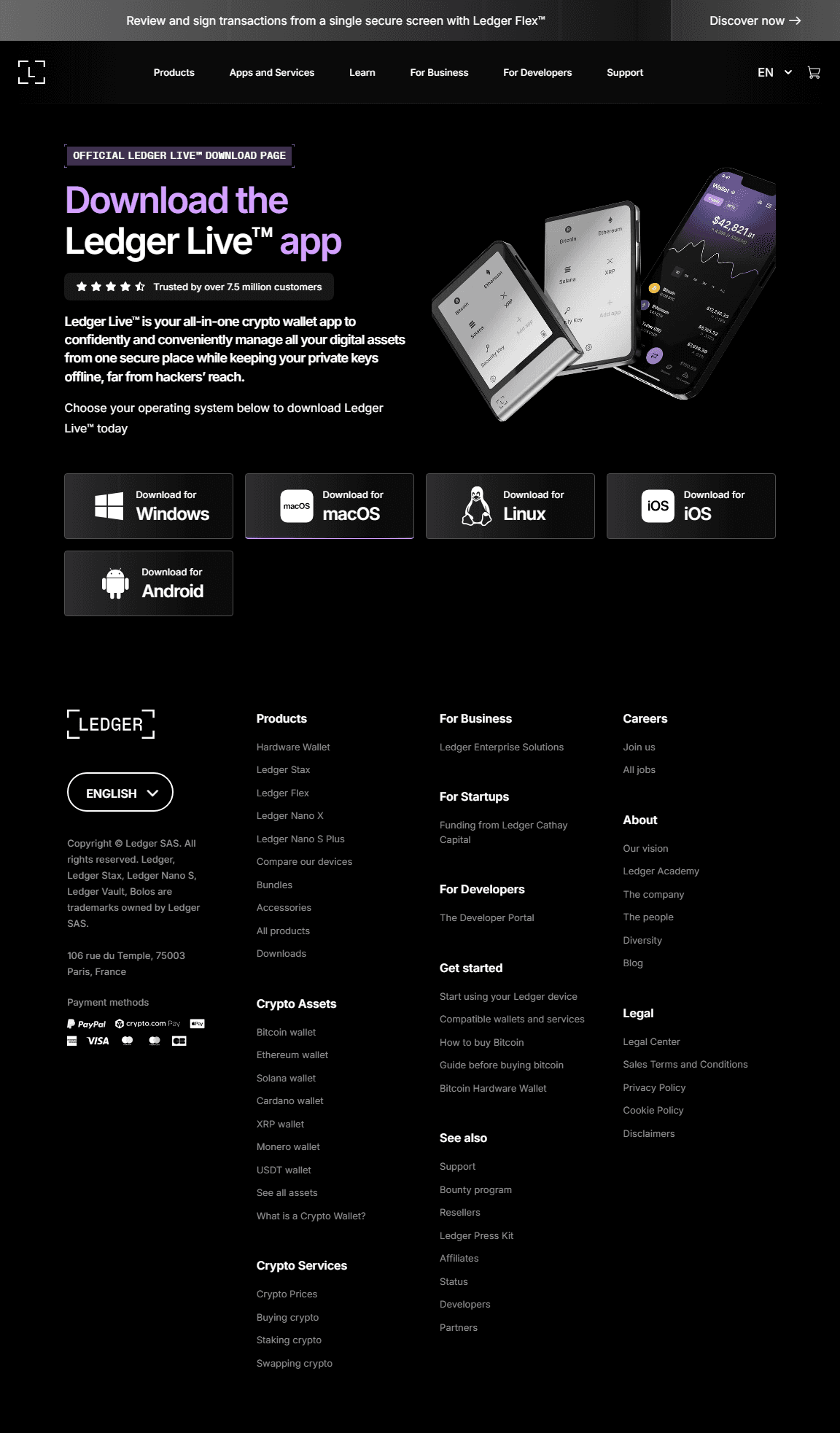
Download Ledger Live, the free desktop or mobile app, from official channels. For desktop, it's available for Windows, macOS, and Linux; mobile supports iOS and Android with Bluetooth for Nano X/Flex. Launch the app and select "Get Started" or "Initialize a new Ledger device." Enable Bluetooth if using wireless models.
The app prompts a genuine check: connect via USB or Bluetooth, and it verifies the device's firmware against Ledger's servers. Update firmware if prompted—this installs the latest security patches via a secure bootloader.
Connecting and Syncing Your Device
Plug in or pair the device; Ledger Live detects it automatically. Unlock with your PIN on the device screen. The dashboard appears, showing zero balances initially. Install blockchain apps (e.g., Bitcoin, Ethereum, Solana) from the app's Manager section—these enable support for specific cryptocurrencies without storing keys online.
Sync accounts by adding them: select a crypto, create a new account, and let it fetch addresses. Multiple accounts per chain allow organization, like separating trading and long-term holdings.
Receiving Your First Crypto Assets
To receive funds, generate a deposit address in Ledger Live: navigate to the account, click "Receive," and approve on the device. Copy the address or QR code. From an exchange or another wallet, send a small test amount first—verify arrival before larger transfers.
Always double-check addresses on the device screen during approval. For chains like Ethereum, note gas fees; Ledger Live displays estimated costs transparently.
Sending Crypto Securely
Initiate sends from Ledger Live: enter recipient address, amount, and fees. Review details carefully—the device displays a summary for physical confirmation. Press buttons to approve; transactions sign offline, broadcasting only the signed data.
This "air-gapped" signing prevents man-in-the-middle attacks. For NFTs or DeFi, connect to third-party interfaces like MetaMask after enabling "Blind Signing" cautiously—review contract data when possible.
Advanced Setup: Multiple Accounts and Integrations
Create sub-accounts for portfolio segmentation: in Ledger Live, add accounts per app for diversified management. Connect to software wallets like MetaMask or Phantom for dApps: select "Connect Hardware Wallet," choose Ledger, and approve paths.
Support spans over 5,500 coins and tokens. Customize devices like Flex with NFTs or names post-setup for personalization.
Security Best Practices from Day One
Store recovery phrase offline in metal backups; split across locations if needed.
Use strong, unique PINs; reset after 3 wrong attempts wipes the device.
Update apps and firmware regularly via Ledger Live.
Avoid public Wi-Fi or untrusted computers for connections.
Ignore unsolicited "support" requests—Ledger never asks for your phrase.
Phishing remains the top threat; verify URLs and prompts match official designs.
Troubleshooting Common Start Issues
Device not detected? Check cables, restart app/device, or toggle Bluetooth. PIN forgotten? Reset with recovery phrase. "Not Genuine" error? Contact support with proof of purchase. Lost tokens? Scan for unsupported apps or use explorers like Etherscan.
Firmware mismatches halt operations—always prioritize updates.
Managing Portfolios and Beyond
Post-setup, explore staking (e.g., ETH, SOL), swapping, or buying via partners directly in Ledger Live. Track net worth, set passphrases for hidden wallets, or delete spam tokens. For businesses, multi-sig setups enhance enterprise security.
Next Steps in Your Ledger Journey
With setup complete, transfer holdings from exchanges gradually. Experiment with small transactions to build confidence. Ledger's ecosystem evolves with features like Clear Signing for readable tx data. Self-custody empowers financial sovereignty—handle keys responsibly for lifelong protection.